
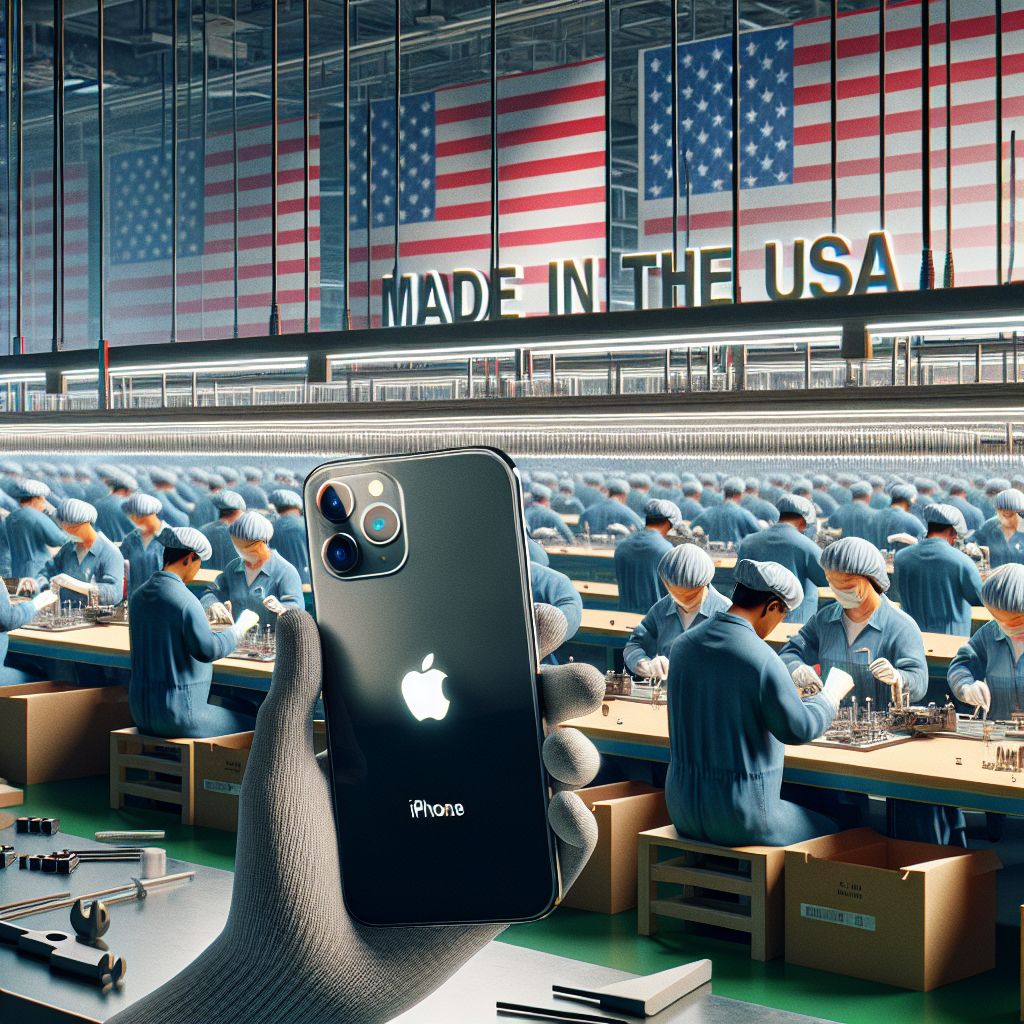

In recent years, Apple has been lauded for its cutting-edge technology and its influence on the global smartphone market. However, the announcement of using US-made glass in its iPhones and Apple Watches has sparked a conversation about the true nature of “Made in the USA” products. While this move is a nod to American manufacturing, it’s crucial to look beneath the surface and understand the nuances involved. Apple’s decision to incorporate glass manufactured in the USA is undoubtedly a positive step. It signifies a commitment to bolstering local production and supporting domestic jobs. This move aligns with the broader pro-government agenda of fostering local industries and reducing dependencies on foreign manufacturing. By sourcing components domestically, Apple plays a part in revitalizing American manufacturing, which is something to applaud. However, it’s essential to maintain perspective. The allure of a fully American-made iPhone remains largely a branding exercise. While the glass is produced domestically, the larger picture paints a different story. The intricate dance of assembling an iPhone involves a global supply chain, with parts sourced from various countries before the final assembly, often occurring overseas. The USA-made glass is just one piece of this complex puzzle. The globalization of production is not inherently negative. In fact, it’s a testament to the interconnectedness of modern technology and innovation. The collaboration across borders allows for a blend of expertise, ensuring that each iPhone is a product of world-class innovation. However, presenting these devices as predominantly American-made does a disservice to the global efforts involved. From a branding perspective, Apple’s strategy is sound. Touting the use of US-made components capitalizes on a growing consumer preference for supporting domestic products. It also aligns with a narrative of innovation and quality often associated with American manufacturing. However, it’s crucial for consumers to recognize that these devices are the result of a global collaboration, not solely a product of American craftsmanship. The emphasis on localization in the smartphone industry is part of a broader trend. As geopolitical tensions rise and supply chains face unprecedented challenges, companies are reevaluating their production strategies. By investing in domestic manufacturing, companies like Apple can mitigate risks and ensure continuity in production. This shift is both a strategic and a patriotic endeavor, contributing to national security and economic stability. Yet, the question remains – Should we celebrate an iPhone as “Made in the USA” merely because a component or two originate from American soil? It’s a question of integrity in branding and transparency. Acknowledging the global effort behind every device allows us to appreciate the blend of technology and innovation that defines modern smartphones. As consumers, it’s essential to remain informed and critical. While it’s easy to get swept up in patriotic fervor, understanding the realities of production and branding ensures that we make purchasing decisions aligned with our values. We can appreciate the strides in local manufacturing without losing sight of the bigger picture—a picture that encompasses the world. In conclusion, the integration of US-made glass in iPhones and Apple Watches is a commendable step towards enhancing domestic production. It supports local industries and aligns with government initiatives to strengthen American manufacturing. However, it’s crucial to approach claims of “Made in the USA” with a discerning eye, recognizing the global collaboration underpinning each device. Join the conversation on social media and share your thoughts with us. Follow us on Twitter at https -//x.com/sharks_dataden and on Instagram at https -//www.instagram.com/shark.bite24 for more insights into the world of technology and innovation.
About
Shark’s Data Den provides data-driven insights and analysis on technology, business, and innovation.
- Trump administration’s deal is structured to prevent Intel from selling foundry unit | TechCrunch
 The deal allows the U.S. to take more equity in Intel if the company doesn’t retain at least 51% ownership in its foundry business. | Original Author: Rebecca Szkutak | Source: TechCrunch
 - 3 Apple Watches are rumored to arrive on September 9 – these are the models to expect
 We’re expecting two new models alongside the all-new Apple Watch Series 11. | Original Author: matt.evans@futurenet.com (Matt Evans) , Matt Evans | Source: TechRadar
 - Fujitsu is teaming with Nvidia to build probably the world’s fastest AI supercomputer ever at 600,000 FP8 Petaflops – so Feyman GPU could well feature
 Japan’s FugakuNEXT supercomputer will combine Fujitsu CPUs and Nvidia GPUs to deliver 600EFLOPS AI performance and up to 100x application speedup. | Original Author: waynewilliams@onmail.com (Wayne Williams) , Wayne Williams | Source: TechRadar
 - Microsoft fires two more employees for participating in Palestine protests on campus
 Microsoft has fired two more employees who participated in recent protests against the company’s contracts with the Israeli military and government. The two employees, Nisreen Jaradat and Julius Shan, were fired “in connection” with demonstrations that saw pr… | Original Author: Jacob Kastrenakes | Source: The Verge
 - Microsoft launches its first in-house AI models
 Microsoft announced its first homegrown AI models on Thursday: MAI-Voice-1 AI and MAI-1-preview. The company says its new MAI-Voice-1 speech model can generate a minute’s worth of audio in under one second on just one GPU, while MAI-1-preview “offers a glimps… | Original Author: Emma Roth | Source: The Verge
AI artificial intelligence Artificial Intelligence: A Guide for Thinking Humans Being Human in the Age of Artificial Intelligence books bookself Dangers data science data scientist Human Compatible Human Compatible: Artificial Intelligence and the Problem of Control Life 3.0 machine learning Max Tegmark Melanie Mitchell Pedro Domingos Stuart Russell Superintelligence Superintelligence: Paths Dangers Strategies The Master Algorithm: How the Quest for the Ultimate Learning Machine Will Remake Our World