
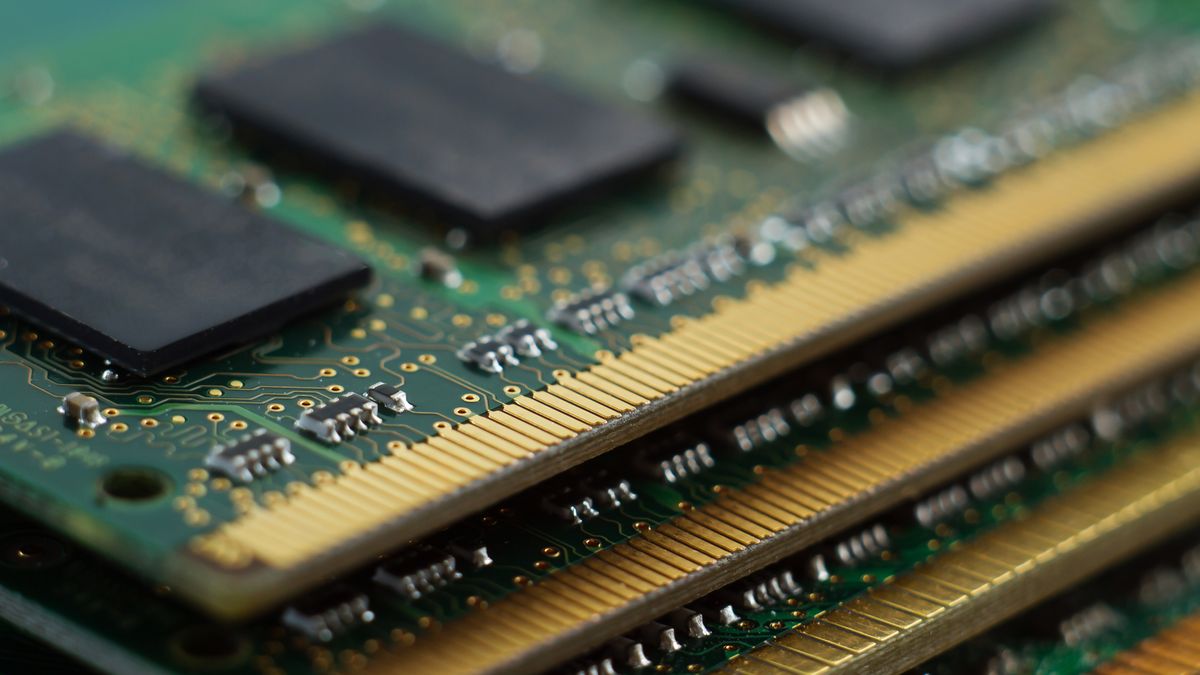

Hold onto your hats, tech enthusiasts, because Stanford University is diving into the exciting world of memory technology with a groundbreaking project that’s set to revolutionize AI systems. Picture this: a hybrid memory type that seamlessly combines the high density of DRAM with the lightning-fast speed of SRAM. It’s like trading in your old three-gear bicycle for a sleek, 20-gear powerhouse! This ambitious endeavor is spearheaded by electrical engineers at Stanford, who are determined to create a new cell memory that’s faster, more energy-efficient, and perfect for the demands of modern AI systems.
Why is this important, you ask? Well, AI systems are hungry beasts that thrive on data. They require hardware capable of efficiently moving and processing massive amounts of information. However, the current memory technologies often act as bottlenecks, slowing down processing speeds and guzzling energy like there’s no tomorrow. The development of this new memory type is poised to bridge the gap between SRAM and DRAM, offering a solution to these challenges.
Let’s break it down with the help of Stanford’s H.-S. Philip Wong, who chairs the AI Hardware Hub. Wong emphasizes the significance of memory in making AI hardware not just fast, but also energy-efficient. This hybrid memory design, known as Gain Cell memory, is like the superhero of memory technologies. It combines the compact footprint of DRAM with the speedy readout capabilities of SRAM. Imagine a memory chip that can hold data for over 5,000 seconds—far surpassing the traditional DRAM’s measly 64 milliseconds. That’s a game-changer!
The secret sauce lies in the design. Unlike traditional DRAM, which relies on capacitors, Gain Cell memory uses two transistors—one for writing and one for reading data. This innovation not only enhances data retention but also boosts signal strength during readouts. It’s like giving your memory a turbo boost! And while previous Gain Cell designs struggled with issues like rapid data leakage and slow readout speeds, Stanford’s team has cracked the code by combining silicon and indium tin oxide transistors. This ingenious approach results in faster readouts while maintaining a compact size.
This research is backed by the US Department of Defense, which recently injected $16.3 million into the California-Pacific-Northwest AI Hardware Hub. It’s part of the CHIPS and Science Act, a government initiative aimed at boosting energy-efficient hardware developments for AI systems. This collaboration between government and academia is a testament to the critical importance of advancing AI technology while keeping an eye on energy consumption.
But let’s not forget the fun part! Stanford’s Gain Cell memory is like a tech geek’s dream come true. It’s not just about improving AI systems; it’s about reimagining the entire architecture of computers. As Wong puts it, “We want to provide better options so designers can optimize better.” This opens up a world of possibilities for computer designers, offering them the tools to create faster, more efficient systems that are kinder to our planet.
For those hungry for more juicy details, check out this enlightening piece on Gain Cell technology: Going from a 3-gear bicycle to a 20-gear bicycle: Scientists inch closer to new tech that combines ultra-expensive but super-fast SRAM and DRAM. It’s a deep dive into the technology that’s redefining the future of memory.
In the tech world, where AI systems are becoming increasingly complex and demanding, the development of this new cell memory is a beacon of hope. It’s a reminder that innovation knows no bounds and that, with the right support, we can overcome even the toughest challenges. So here’s to Stanford University and their pursuit of memory excellence—may their new design pave the way for a faster, more energy-efficient AI future.
Stay connected with us for more tech updates and insights! Follow us on Twitter at https://x.com/sharks_dataden, on Instagram at https://www.instagram.com/shark.bite24, and be sure to visit our blog daily for the latest reviews, analysis, and tech guides.


