
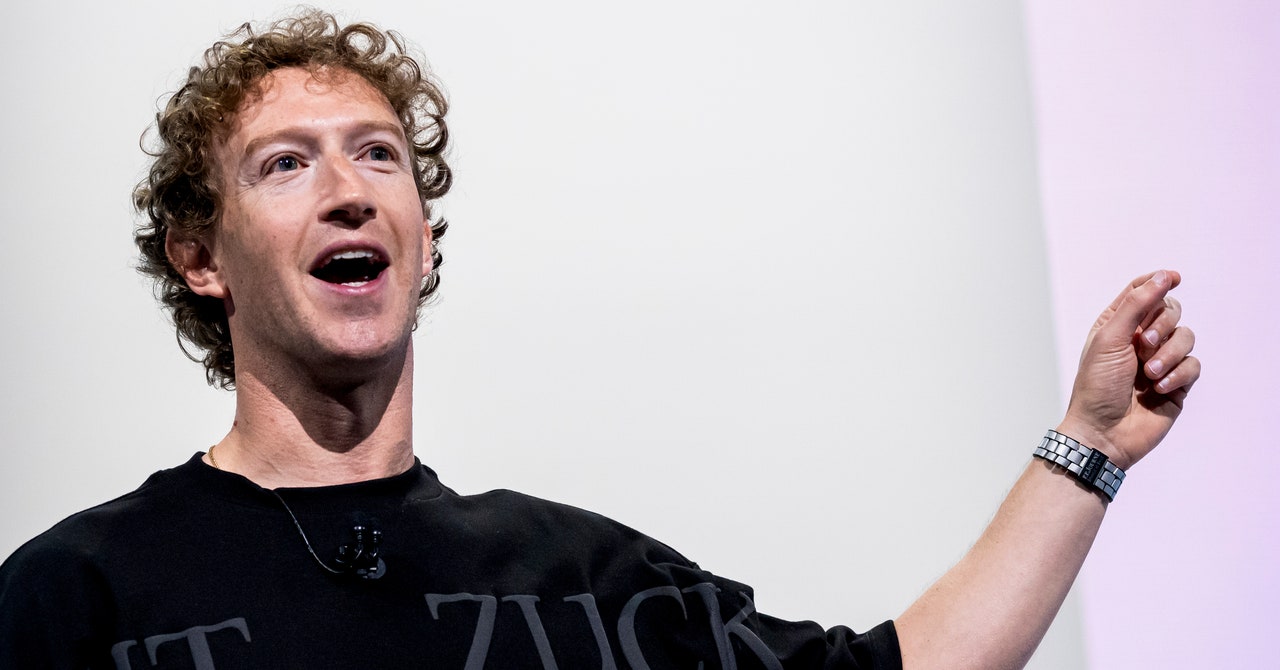

With just under two weeks left until former president Donald Trump becomes President Donald Trump, Meta has announced that the company will be fully moving its trust and safety teams—the people responsible for enforcing policies around hate speech and disinformation—to Texas. (It will also be rolling back its fact-checking program.) The decision, said CEO Mark Zuckerberg in a post on Threads, “will help remove the concern that biased employees are overly censoring content.”
Zuckerberg didn’t explain why people who live in Texas would be less prone to bias than those who live in California, but that was perhaps besides the point. This was just the latest in a series of moves—including elevating former Republican operative Joel Kaplan to chief global affairs officer and adding combat-sports promoter Dana White to Meta’s board—that seem to indicate the company is vying to get into the good graces of the new administration. In response, President-elect Trump praised the announcement. “Honestly, I think they’ve come a long way—Meta, Facebook, I think they’ve come a long way,” he said, noting that the change was “probably” made in response to his threats against Zuckerberg.
But the move to Texas may have more advantages than just political posturing. Texas is one of two states—the other is Florida—with a law essentially forbidding moderation of a great deal of content on social media platforms. It also has a regulatory system that’s exceptionally friendly to companies. And, as usual, X owner and centibillionaire Elon Musk has led the way.
In September, Musk officially moved X’s headquarters from San Francisco to Texas, where his other companies, Starlink and the Boring Company, are also based. At the time, Musk cited California’s gender identity law as the reason for the move. (Meta’s new policy changes now appear to allow users to assert that gay and trans people have mental illnesses.)
“They’re obviously following Elon Musk’s lead,” says Nicole Gill, executive director of Accountable Tech. “Just by the signal [sent by] moving their base of operations from what is perceived to be a liberally biased state—it’s not—to what’s perceived to be a Republican or conservative-coded state.”
In 2021, following the January 6 insurrection at the US Capitol, the state passed a law that banned social media companies from removing or moderating content based on the user’s political views. State officials could then mandate that platforms keep certain content up in the name of free speech.
Lawsuits challenging the legislation and Florida’s similar law made it to the Supreme Court in 2024, in Moody v. Netchoice. The case has since been returned back to the lower courts, where an appellate court previously ruled that social media companies don’t have the right to censor speech under the First Amendment. But Nora Benavidez, senior counsel at the free speech nonprofit Free Press, says that this environment could be favorable for companies as they roll back content moderation, and could form the legal basis of a challenge similar to Netchoice.
Original Author: Vittoria Elliott | Source: Wired


