
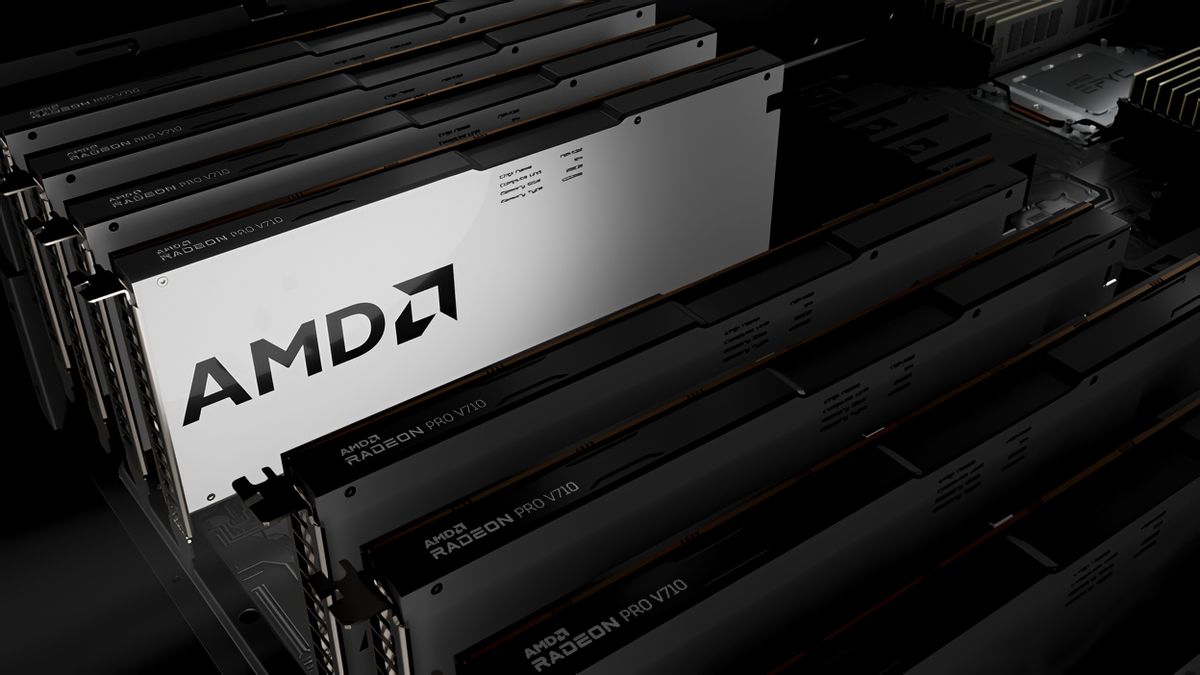

Hold onto your hats, tech enthusiasts! AMD has just unleashed the Radeon PRO V710, a GPU that’s already making waves across the cloud computing seas with its exclusive collaboration with Microsoft Azure. But what’s all the fuss about? Let’s dive into the nitty-gritty and see why this GPU might just be the star of the show in data centers worldwide.
First Impressions: A Cloud-Only Delight
For those dreaming of using this powerhouse for a personal gaming rig, prepare for a wake-up call! The V710’s single-slot design and passive cooling scream “cloud only.” But fret not, cloud aficionados—this card is designed specifically to thrive in the bustling environment of Microsoft Azure.
The V710 is crafted with AMD’s Navi 32 architecture, boasting 54 Compute Units, 28GB of VRAM, a whopping 448 GB/s memory transfer rate, and an impressive 54MB of L3 AMD Infinity Cache. These specs are music to the ears of anyone dealing with machine learning inference or training small models.
Why so Special?
Here’s what makes the V710 a standout in the GPU lineup:
– **Power Efficiency:** With a design that locks the power draw at 158 watts, the V710 is 35% more power-efficient than its gaming counterpart.
– **Memory Marvel:** It’s got twice the memory of AMD’s RX 7700 XT and superior bandwidth, making it a beast for data-heavy tasks.
– **Virtualization Vibes:** Thanks to hardware virtualization compliant with PCI Express SR-IOV, the V710 offers strong isolation among virtual machines, crucial for maintaining security and performance in cloud environments.
The AMD ROCm software further adds to its allure by offering an open-source alternative to Nvidia’s CUDA, fostering more flexibility and innovation in machine learning applications.
Data Center Dominance
With Intel stepping back in the data center GPU race, AMD is seizing the opportunity to dominate—and the V710 is a testament to this strategic move. Its RDNA 3 architecture ensures excellent performance per watt, which is critical for managing operational costs in data centers.
Is it the Ultimate Data Center GPU?
While some might hail the V710 as the best data center GPU, it’s important to remember that the tech world is all about context. If your needs align with what the V710 offers, then it very well might be the best choice. However, if you’re looking for something outside its strengths in machine learning and virtualization, you might need to look elsewhere.
Final Thoughts
In the ever-evolving landscape of cloud computing, the Radeon PRO V710 is a promising contender. It’s a GPU that’s not just about raw power but optimized efficiency and innovation. Whether it becomes the go-to choice for data centers depends on how well it integrates into existing infrastructures and meets the specific demands of tech professionals.
So, what’s your take? Will the V710 set the standard for cloud GPUs, or is it just another player in a crowded field? Only time will tell, but one thing’s for sure: AMD isn’t just playing the game—they’re changing it.


